“Swiss culture” search results (152)

Is Nestl é too optimistic about instant coffee and a drag on mergers and acquisitions?
In February 2015, nearly 400 tons of unexpired Nestle coffee was destroyed in Dongguan, Guangdong, with a market value of nearly 10 million. Nestl é officials responded that the move was to keep products fresh and destroy stocks. The dumping of instant coffee by Nestl é (China) Co., Ltd. (hereinafter referred to as Nestle China) is the largest destruction of instant coffee since the factory was established in 1992. Xu Xiongjun, an expert on strategic positioning of food and beverage, believes that
2015-04-15 Nestl é instant coffee overly optimistic mergers and acquisitions business dragging its feet
Eight brands of instant coffee introduce the basic knowledge of coffee
The origin of coffee Coffee originated in Ethiopia. It was used as a beverage in North Africa and West Asia for hundreds of years before it was introduced into Europe in the 17th century. Coffee plantations have been set up in all hot and humid parts of the world, and coffee has become a popular drink. But it takes a lot of days to make a pot of delicious coffee. Coffee beans must be ground into fine powder. You'd better use it.
2015-06-23 Instant coffee eight brands introduction basics common sense
Beijing characteristic Restaurant: who are you going to go with these 100 small and beautiful shops?
50. FlORETTE address: No. 5 Shimen Village, Baiziwan Road, Chaoyang District, which can be called the most difficult flower shop in Beijing, is an independent old red brick house. Surrounded by a green garden, it is located in an art park renovated by an old factory building, which was almost in ruins before the transformation. Design and research, planting flowers and trees, is work and life, when the flower shop is completed, that kind of
2015-12-08 Beijing special features restaurants 100 small beautiful shops preparation who will go
Chinese Coffee Development Agricultural Research Institutes promote Chinese Coffee
At this point, the author's mood is agitated and dignified. Today, when Chinese coffee, especially Yunnan small-grain coffee, has developed to large-scale industrialization through the persistent cultivation of several generations of Chinese mainland and after several ups and downs, it is not easy to be rated as a first-class product by the International Coffee Organization (ICO). The author believes that Yunnan small-grain coffee can quickly rise in Chinese mainland and China's agricultural scientific research.
2015-02-07 China coffee development agriculture scientific research institutes boost author draft so far heart
Coffee bean purchase strategy coffee bean grade division
Next, let's talk about the varieties of coffee beans. There are many varieties of coffee beans, some are sour, some are sweet, some are bitter, and some have some special aroma. As I mentioned earlier, I personally think that there is no uniform standard for the classification of coffee beans. Different people have their own ruler for good coffee according to their preferences for sour, sweet and bitter taste. In this article, I will follow my own
2015-11-03 Coffee beans purchase strategy grade division
Introduction to Coffee knowledge single Coffee extraction equipment
Generally, you can drink coffee to a single product without sugar and milk, which is a high-level veteran. Individual coffee is also known as vegetarian coffee, or Zhai coffee, which shows that ordinary Chinese still have a great misunderstanding about this kind of coffee! After all, in the eyes of most ordinary people, coffee is synonymous with bitterness! No bitter, no coffee! Most of the people who really like individual coffee have drunk the really good ones.
2015-11-02 Coffee knowledge entry item extraction equipment
The basic information of coffee is Coffea arabica.
[scientific name] the small grain species is Coffea arabica L., the medium grain species is Coffea canephora, the large grain species is Coffea liberica, which is also called Arabian species, the medium seed species is also called Gaffra species, and the large grain species are also called Liberian species. There are two common species: Arabica and Robusta. Rubiaceae (Rubiaceae), coffee genus (Coffea) [domestic]
2015-07-30 Coffee basic information small grain Coffea arabica scientific name small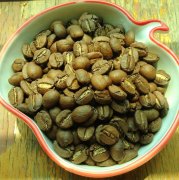
The secret of Jamaican Blue Mountain Coffee sweeping the World-authentic Blue Mountain with a long lasting charm
Mavis Bank is the second largest national brand of Blue Mountain Coffee in Jamaica. Located halfway up the Blue Mountains, the factory is mainly focused on the acquisition of raw beans from local coffee farmers and unified treatment (the growing environment of beans is about 1200-1400 meters, and the varieties of beans are Tippi Karan Mountain branches). Its cooked bean brand has been translated into gourmet blue in China and is very well-known among domestic coffee consumers. @ Blue
2015-09-11 Jamaica Blue Mountain Coffee Fashion World Secret authentic lasting long
History of introduction and expansion of Coffee in China in the early stage of Coffee Development (5)
1. From the first peak period of the development of China's coffee industry (1952-1961) to the late 1940s, according to recorded figures, there are 2173.33 hectares of rubber plantations in Hainan Island, with a total of 867600 rubber trees, with an annual output of 199,000 tons of dry rubber, and more than 300,000 coffee plants. the annual output of coffee beans is 1 ton. According to a survey in the early 1950s, there was a large amount of coffee left in Fushan area of Chengmai County, with a total of 70,000.
2015-03-09 China coffee development course early stage introduction expansion
History of introduction and expansion of Coffee in early China (5)
1. From the first peak period of the development of China's coffee industry (1952-1961) to the late 1940s, according to recorded figures, there are 2173.33 hectares of rubber plantations in Hainan Island, with a total of 867600 rubber trees, with an annual output of 199,000 tons of dry rubber, and more than 300,000 coffee plants. the annual output of coffee beans is 1 ton. According to a survey in the early 1950s, there was a large amount of coffee left in Fushan area of Chengmai County, with a total of 70,000.
2015-04-28 Early China coffee introduction expansion
Coffee planting History of Coffee introduction and expansion in China in the early stage (5)
1. From the first peak period of the development of China's coffee industry (1952-1961) to the late 1940s, according to recorded figures, there are 2173.33 hectares of rubber plantations in Hainan Island, with a total of 867600 rubber trees, with an annual output of 199,000 tons of dry rubber, and more than 300,000 coffee plants. the annual output of coffee beans is 1 ton. According to a survey in the early 1950s, there was a large amount of coffee left in Fushan area of Chengmai County, with a total of 70,000.
2014-10-14 Coffee knowledge coffee growing history Chinese coffee
The History of Coffee introduction and expansion in China in the early stage (5)
1. From the first peak period of the development of China's coffee industry (1952-1961) to the late 1940s, according to recorded figures, there are 2173.33 hectares of rubber plantations in Hainan Island, with a total of 867600 rubber trees, with an annual output of 199,000 tons of dry rubber, and more than 300,000 coffee plants. the annual output of coffee beans is 1 ton. According to a survey in the early 1950s, there was a large amount of coffee left in Fushan area of Chengmai County, with a total of 70,000.
2014-12-01 Coffee History Common sense early China introduction expansion planting Industry